This is from the week of July 13, 2003 from KPIX Channel 5 News. (No, I’m not sure exactly when actually…sorry.)
KPIX On Developments In The Shrub’s WMD Lie Situation
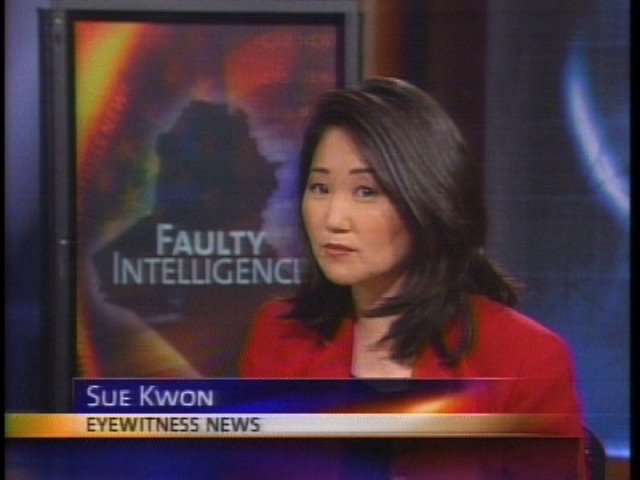
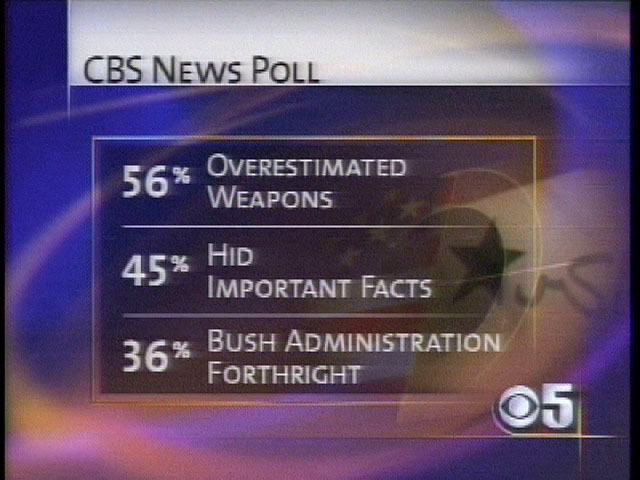
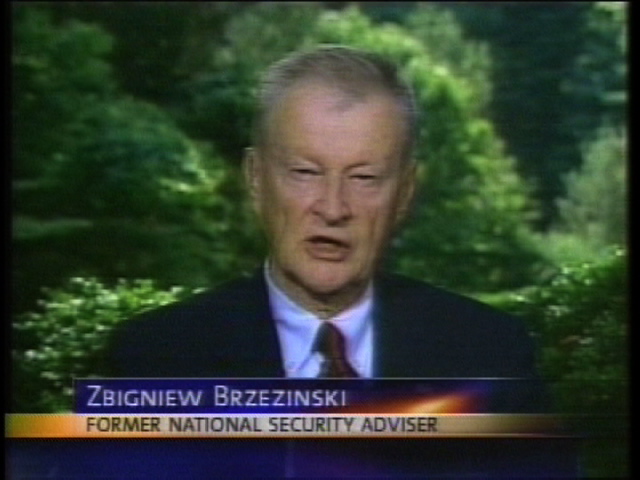
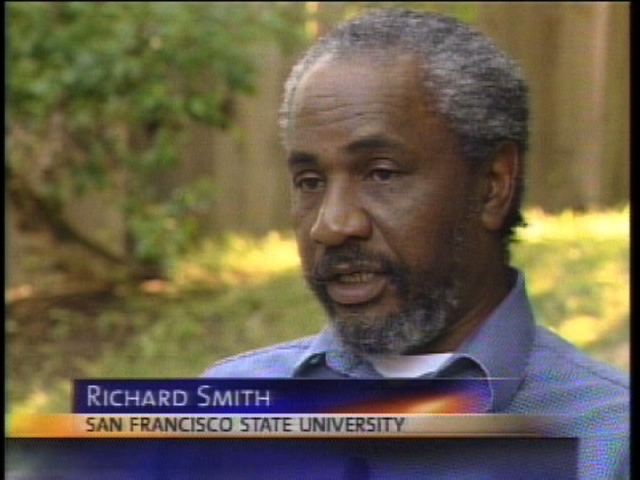
KPIX On Last Week’s WMD Developments
Leave a reply
This is from the week of July 13, 2003 from KPIX Channel 5 News. (No, I’m not sure exactly when actually…sorry.)
KPIX On Developments In The Shrub’s WMD Lie Situation
Um. Aren’t the planets we find going to be further and further away as equipment such as the Hubble Telescope travels further and further into space?
Anyway, here’s a little clip on it from last week from KPIX Channel 5 in San Francisco:
KPIX On The New Distant Planet
The saga continues. This clip doesn’t contain any of the developments that happened over the weekend (which will explain the onslaught of articles to follow…)
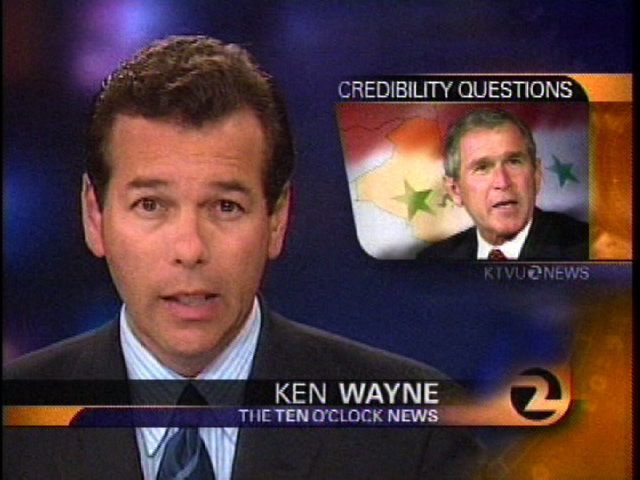
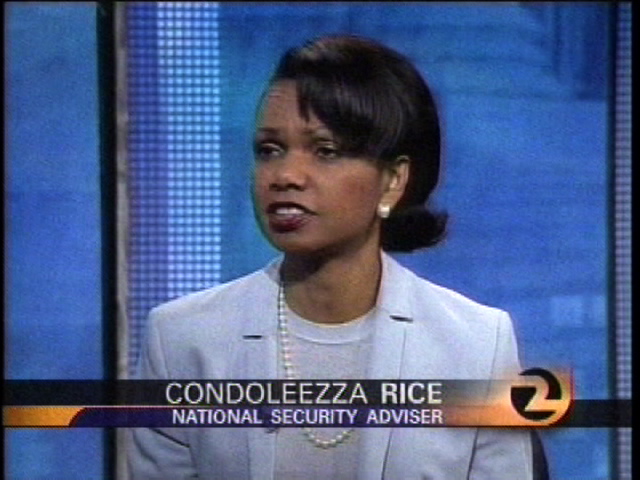
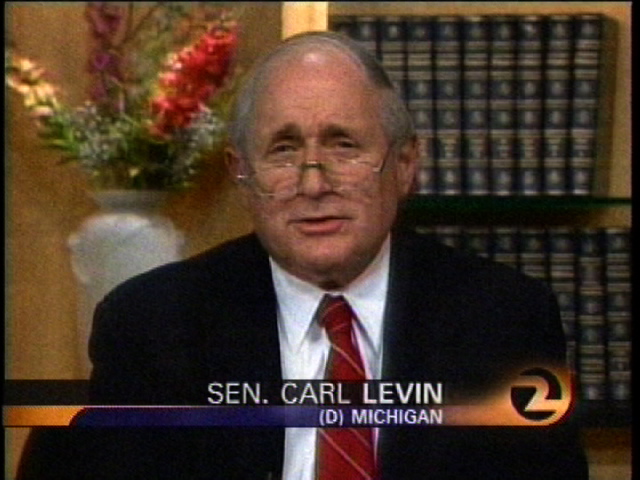
This aired on KTVU Channel 2 on July 13, 2003 at 10pm in San Francisco.
KTVU On The Latest Developments In The Shrub’s WMD Saga

The Copyright Cage
Bars can’t have TVs bigger than 55 inches. Teddy bears can’t include tape decks. Girl Scouts who sing “Puff, the Magic Dragon” owe royalties. Copyright law needs to change.
By Jonathan Zittrain for Legal Affairs.
Jonathan Zittrain is the Jack N. and Lillian R. Berkman Assistant Professor for Entrepreneurial Legal Studies at Harvard Law School and a director of its Berkman Center for Internet & Society.
YES, I HATE THE EFFECTS OF COPYRIGHT ON A DIGITAL REVOLUTION that heralds so much more than the banal ripping off of CD tracks. I hate that creativity is metered and parceled to its last ounce of profit. I hate that our technology is hobbled beyond its paper and other analog counterparts so that it permits us to view but not print, listen but not share, read once but not lend, consume but not create. But I can hate this situation without believing that the idea of copyright is fundamentally flawed. The framers’ vision of intellectual property (then known as “monopolies”) called for built-in limits to a creator’s exclusive rights. A copyright term, for example, would expire even if a work still held commercial value…
It’s time for us to wise up and to redraw copyright’s boundaries so that the law and reasonable public expectations fall into better alignment with one another…
Scholars like William Fisher of Harvard Law School have floated ideas as sensible as they are radical-not to mention offensive to almost every interest in the copyright debates, from publisher to middleman to anarchist. He suggests in an upcoming book that ISPs remit to publishers a fee loosely based on the amount of copyrighted digital content that they are roughly calculated to be carrying, at which point people can trade music to their hearts’ content.
Overhauling copyright will have costs to some. In the absence of tough copyright controls, investors may decide not to underwrite a $200 million blockbuster film because copying of the final product may unduly reduce their expected profit. But the cost of making no change at all must also be soberly assessed because the Internet offers such a staggering potential for the rapid transformation and evolution of ideas-a veritable Jazz Age of creation enabled by technology.
I pay my taxes. I have no idea how to calculate them, but I do what Turbotax tells me to. I’ll pay a copyright tax, too, and willingly support artists whose work I appreciate, because it’s the right thing to do and because it guarantees that more work will be made available to me. I’m not alone.
This aired on KTVU Channel 2 on July 13, 2003 at 10pm in San Francisco.
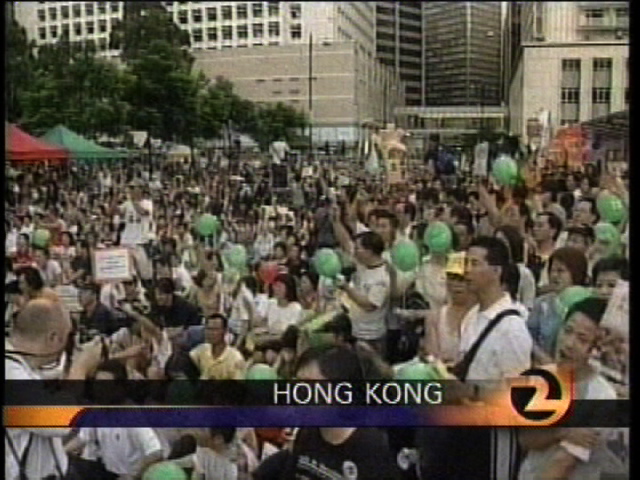
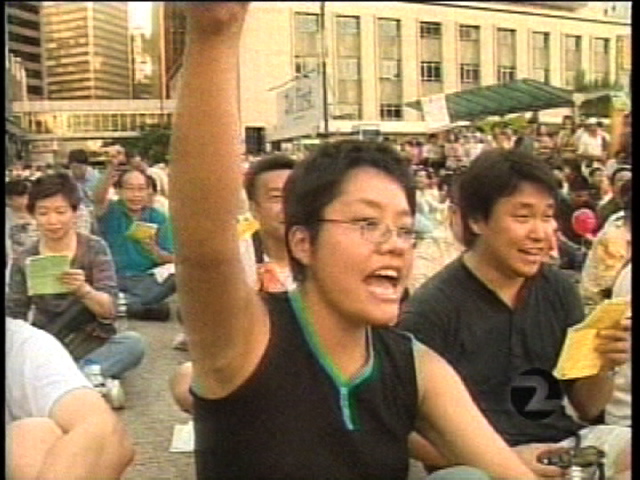
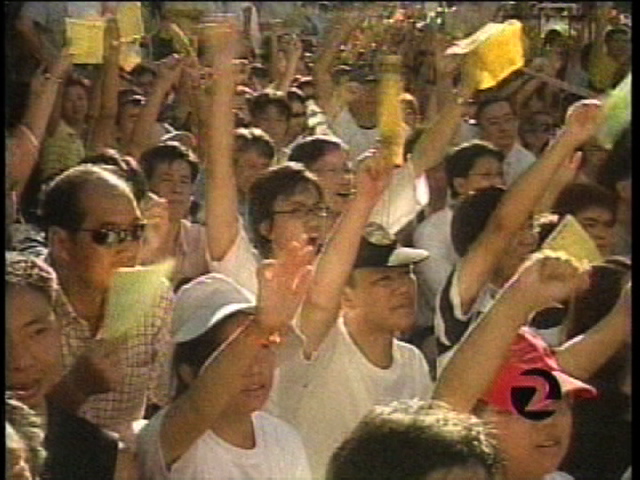
Hong Kong Pro-Democracy Rally (Small – 2 MB)



The FCC Under Fire
By Viveca Novak (With reporting by Eric Roston) for Time.
Populist outrage is threatening to undo a controversial effort by the FCC to loosen restraints on media megaliths. In the Senate last week, seven Republicans joined 28 Democrats to schedule a rare “resolution of disapproval” to overturn new FCC rules that would let companies like News Corp. and Viacom expand their media holdings in local markets. Then in the House, defecting Republicans fueled a 40-to-25 committee vote to reverse part of the FCC’s action. Now it appears that the chief architect of those rules, FCC chairman Michael Powell, may not stick around for the fight. According to industry sources, the son of Secretary of State Colin Powell has told confidants he’d like to leave by fall, and three of his four top staff members are putting out job feelers. (Powell has denied he’s leaving soon.) His most likely replacement, sources say, is either Rebecca Klein, who is head of the Texas public-utility commission and was on the staff of Governor George W. Bush, or FCC commissioner Kevin Martin, who helped the Bush team count votes in Florida in 2000.
Powell rammed through the new rules allowing a single company to own TV stations that reach up to 45% of the national market, an increase from the old 35% cap, and lifting the ban on a company’s owning both a newspaper and a TV station in the same market on a party-line vote in June. But groups as disparate as the National Organization for Women and the National Rifle Association are decrying the move. In a new Pew Research poll, respondents most familiar with the FCC’s action opposed it by roughly 10 to 1. Still, it has the support of key g.o.p. leaders, and President Bush has threatened to veto any bill overturning it.
Republicans who are breaking ranks on the issue face growing party pressure. On the morning of the vote, Congressman Zach Wamp, a Republican from Tennessee who voted to kill the FCC plan, spotted House Energy and Commerce Committee chairman Billy Tauzin, who backs it. “I kind of ducked to the left,” he said, “went around a column and down three flights of stairs.”
Another Successful Bookmobile Voyage!
Day 12
We left Egypt today, boarding a flight which turned out to be a complete nightmare. As I put it: hell on wings, British Airways flight.
The plane sitting on the ground (without air or ventilation) was so hot that Tessa passed out. Very bad. We also got rerouted: instead of flying Cairo->London->SFO we were informed at the airport that we would be going Cairo->Marseiles->London->LA->SFO, which, after losing cabin pressure midair became Cairo->Rome->London(overnite in London)->Chicago (change airlines)->SFO. And, yes, they lost our baggage.
But we’re still alive!
This is why I keep archives guys.
Here’s the original link: “Rescued POW put up fierce fight” — as blogged previously.
Jessica Lynch, rescued Tuesday from an Iraqi hospital, fought fiercely and shot several enemy soldiers after Iraqi forces ambushed the Army
Actor/writer/activist Peter Coyote MC’d the Howard Dean kick off event that took place on June 23, 2003 at the San Francisco Hyatt.
If there are three parts to taking our country back:
1) exposing shrub corruption
2) getting a good candidate to run against him
3) fixing our screwed up election procedures
I’d say we’ve got 1 and 2 pretty well under control.
Time to get started on number 3 in a big way!
After Penelope Houston performed, Peter came back to say a few words to the audience about the dangers of using proprietary software within voting machines.
I spoke to him briefly afterwards to let him know that the word he was searching for is “Open Source.”
I realized after last year’s election that in order for our Electronic Voting Machine software to be trustworthy, it has to be open sourced — or at least made available for scrutiny. Otherwise, by definition, it can’t really be a part of the democratic process.
Making the source and technology available for public scrutiny is the only way to ensure that the proper technological checks and balances can be built into the system (and be double checked afterwards).
I’m about to post an article (and several of the resources referenced by the article) that explains in detail just how badly onen of the current software systems doesn’t measure up to even the most basic of security and accountability requirements. Although the only reason we know this is because the software was made available online. (Which is a good thing!)
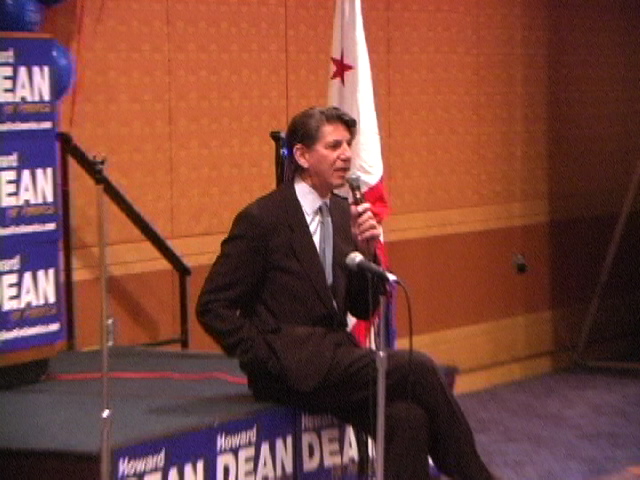
Peter Coyote On The Dangers Of Proprietary Voting Machines (Small – 3 MB)
Transcript: One last thing on the Georgia Voting Fraud. It can’t be proven because the software is proprietary. There’s a dress rehearsal. There’s a website called Votescam.com, and you need to look at it. And everyone of us needs to write our legislators and say: “We want paper ballots.” “We want transparent software.” “We want the government supervising the elections.”
Otherwise, what will happen is, at the end of the day, the Police will take the voting machines, they will give them to the corporation, and the corporation will tell you who won.
There’s a long history of documented voter fraud in this country, and the dress rehearsal was the last presidential election. I narrated a film for a reporter called Greg Palast. 91,000 votes stolen in Florida. 91,000! Go to Greg Palast.com and look it up. Go to Votescam.com. If we don’t stop voter fraud, we’re not gonna win this election. Thank you all very much for coming.
This is right before Ben Hammersley’s Talk At Etech 2003.
Movie of this.